CBS News’ Scott Pelley Lashes Out at Trump in Angry Commencement Speech as Critics Slam ‘Arrogant Man’

Scott Pelley, a well-known correspondent for CBS News, recently stirred controversy after delivering a polarizing commencement speech at Wake Forest University, where he vocally criticized former President Donald Trump. The speech has stirred considerable debate and backlash, particularly from conservative circles, who accused Pelley of being an ‘arrogant man’ and lacking self-awareness.

During his address, Pelley articulated concerns about what he termed an “insidious fear” that has taken root across the United States since Trump’s return to political prominence. He voiced apprehensions that the fundamental pillars of democracy—including the rule of law, journalism, academic institutions, and free speech—are under increasing threat. Pelley’s remarks reflect a broader trend seen in recent political discourse, where commencement speeches have become battlegrounds for ideological conflict.
Accusations of Historical Manipulation
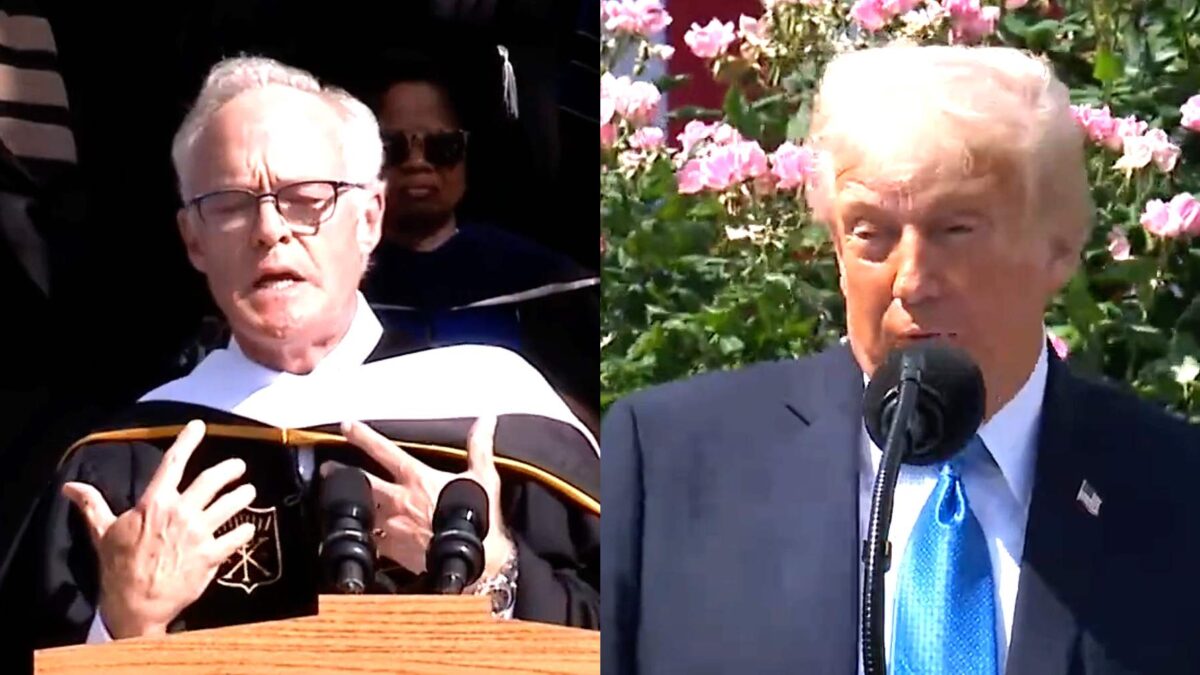
In his speech, Pelley went on to accuse political leaders of manipulating historical narratives. He expressed dismay at how heroes of the past are often recast as villains by those in power, painting a troubling picture of a society where the truth is overshadowed by political agendas. Pelley specifically referenced the evolving meanings of words like “diversity” and “inclusion,” arguing that these terms have become politically charged under the current administration’s leadership.
This assertion has drawn ire from various commentators who argue that Pelley’s speech exemplifies the very hypocrisy he denounces. Critics highlight the paradox of calling for free speech while simultaneously launching pointed attacks against a significant political figure. Many saw his dramatic rhetoric and emotional pauses as excessive and inappropriate for a commencement address, viewing them as reflective of Pelley’s own biases rather than a balanced critique.
Public Reactions: Mixed Reviews

The responses to Pelley’s speech have been sharply divided. Social media erupted with mixed reactions; some users mocked his delivery, deeming it theatrical and labeling him a “pompous” individual. Others pointed to the inherent irony in his claims regarding media bias, noting ongoing legal challenges faced by CBS News over accusations of biased reporting during the Trump administration’s tenure. This has fueled the belief among critics that Pelley’s remarks are less about protecting democracy and more about perpetuating partisan conflict.
Moreover, the public discourse surrounding Pelley’s speech further exposed the evolving landscape of political commentary in the United States. As political figures and their policies increasingly target institutions of higher education, critics argued that Pelley’s message came against a backdrop of tension between educational policies and free speech—particularly regarding issues affecting international students and movements advocating for various causes. Many argue this contentious atmosphere demands that commencement speeches remain apolitical, focusing instead on unifying themes and the celebration of academic achievement.
Growing Trend of Politicized Commencement Addresses

The backlash against Pelley’s address is indicative of a wider phenomenon impacting this year’s commencement speeches across the country. As higher education institutions continue to grapple with the implications of political discourse, many are questioning whether it is appropriate, or even productive, for graduation ceremonies to become platforms for political expression. Experts in political communication argue that commencement speeches should strive to focus on inclusion and celebration rather than veering into polarizing territory.
In light of this growing trend, there are calls for a re-examination of how commencement speakers approach their addresses. The contention that political commentary has a place in these gatherings is being challenged by an increasing number of advocates who believe in preserving the sanctity of the occasion. As universities navigate these waters, the question remains open: is it time to establish guidelines that restrict the politicization of graduation ceremonies?
Overall, the unexpected fallout from Scott Pelley’s commencement speech reflects a larger societal struggle over the role of political discourse in academia. As America grapples with profound issues surrounding free speech and the rule of law, the nature of commencement addresses must be part of an essential dialogue—ensuring these events remain celebrations of achievement and unity, rather than becoming contentious political battlegrounds.
As society continues to evolve, it becomes increasingly crucial for individuals to engage in thoughtful conversations about speech and expression in various settings. Share your thoughts on this important issue—how should commencement speeches reflect our values, and what role should politics play in them?


