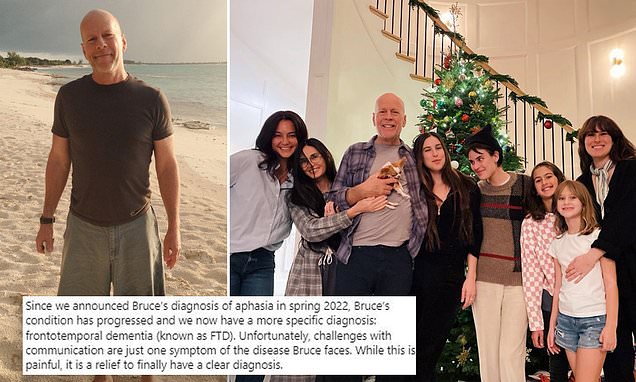
Bruce Willis’ Family Begins Early Mourning as Dementia Worsens
The Impact of Dementia on Bruce Willis and His Family

More than three years after Bruce Willis retired from his iconic acting career due to cognitive health issues, the actor’s battle with frontotemporal dementia (FTD) has taken a profound toll on his family. At 70 years old, Willis, known for legendary roles in films such as *Die Hard* and *The Sixth Sense*, has seen his condition progressively worsen, leading to significant changes in family dynamics and daily life.
Initially diagnosed with aphasia—a disorder that impairs communication—the actor’s diagnosis later evolved into frontotemporal dementia, a neurodegenerative disease that affects behavior, language, and personality. This progression has forced the Willis family to confront the harsh realities of dementia much earlier than they anticipated, especially for their young daughters, Mabel and Evelyn.
Adjusting to New Realities: The Family’s Journey

Emma Heming Willis, Bruce’s wife, has openly shared the emotional and practical challenges of caring for a loved one with FTD. In recent interviews, she revealed how the family made the difficult decision to move Bruce into a separate residence with 24-hour professional care. This move was designed to provide Bruce with the specialized support he requires while maintaining a stable, nurturing environment for their daughters in the family home.
Emma emphasized the importance of this arrangement, stating, “We have two young children, and it was just important that they had a home that supported their needs and that Bruce could have a place that supported his needs.” This decision, while met with some public debate, was firmly defended by Emma as essential for both Bruce’s safety and the emotional wellbeing of their children.
Despite the challenges, moments of connection and love continue to shine through. However, the family openly acknowledges the grief that accompanies watching Bruce’s gradual decline. Emma shared with *Vogue Australia* that their daughters are “doing well, all things considered,” but they deeply grieve the loss of the father they once knew. Missing important milestones and daily interactions has been especially tough for the children.
Extended Family Support and Advocacy

The impact of Bruce Willis’ dementia extends beyond his immediate family. His daughters from his previous marriage to Demi Moore—Rumer, Scout, and Tallulah—have also been actively involved in supporting their father and expressing their love publicly. Rumer has spoken candidly about the emotional difficulty of seeing her father sometimes unable to recognize her, yet she remains hopeful that he can still feel the love surrounding him.
Emma Heming Willis has taken on a role not only as a caregiver but also as an advocate for greater awareness of frontotemporal dementia. Through her candid reflections, she highlights the profound ways FTD reshapes lives—not just for those diagnosed but for their entire families. Her openness helps shed light on the emotional and logistical complexities faced by caregivers worldwide.
Understanding Frontotemporal Dementia and Its Effects

Frontotemporal dementia is a form of dementia characterized by progressive nerve cell loss in the brain’s frontal and temporal lobes. Unlike Alzheimer’s disease, FTD often presents earlier and primarily affects personality, behavior, and language skills. This can lead to significant challenges in communication and daily functioning, which Bruce Willis and his family are currently navigating.
The disease’s progression is unpredictable, and symptoms can vary widely, making caregiving particularly demanding. Families must often balance the need for specialized medical care with the emotional needs of all members, especially children who may struggle to understand the changes in their loved one.
Support Systems and Care Strategies

For families like the Willises, creating a supportive environment is crucial. Professional care teams, therapy, and open communication help manage the complex symptoms of FTD. Emma’s decision to provide Bruce with 24-hour care in a dedicated facility reflects best practices in dementia care, ensuring safety and specialized attention.
At the same time, maintaining a stable and nurturing home life for children is essential. Emma’s focus on creating a calm environment for Mabel and Evelyn underscores the importance of balancing care for the patient with the emotional wellbeing of the entire family.
Conclusion
Bruce Willis’ family’s experience with frontotemporal dementia is a poignant reminder of the far-reaching impact of this devastating disease. As his condition worsens, the Willises demonstrate resilience, love, and the importance of compassionate care. Their journey highlights the need for greater awareness and support for families affected by dementia.
If you or a loved one are facing similar challenges, remember that you are not alone. Seeking professional guidance and connecting with support networks can make a significant difference. Stay informed, stay compassionate, and reach out to organizations dedicated to dementia care to find the resources you need.