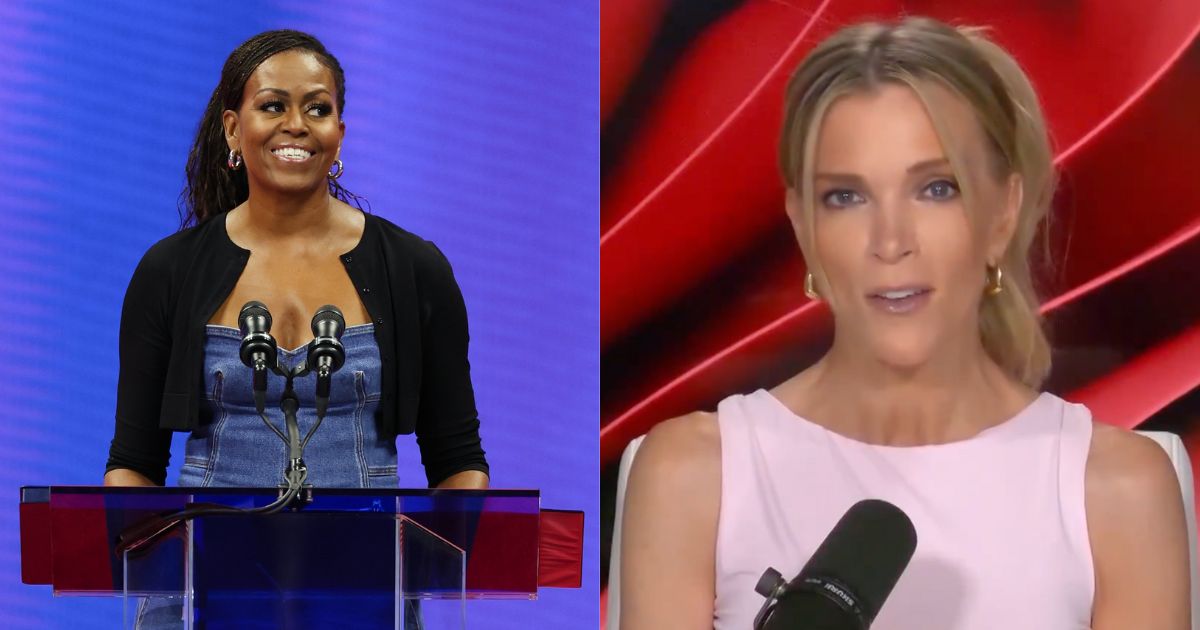
Megyn Kelly Loses It Over ‘Bitter’ Michelle Obama’s Racially Charged Complaints About Not Being Allowed to ‘Embrace Her Natural Hair’ as First Lady — ‘Is She F—— Kidding?’
Megyn Kelly’s Fiery Response to Michelle Obama’s Hair Controversy

Megyn Kelly recently sparked controversy with her outspoken reaction to Michelle Obama’s comments regarding the difficulties she faced maintaining her natural hair during her tenure as First Lady. While promoting her new style book, *The Look*, Michelle Obama shared with *People* magazine the challenges of conforming to beauty standards that often disregard natural Black hair textures. She described the extensive time and money spent straightening her naturally curly hair to fit societal expectations.
However, Megyn Kelly was quick to dismiss these complaints as “bitter” and racially charged, questioning the legitimacy of Michelle Obama’s grievances. On her podcast, Kelly expressed disbelief, saying, “Is she f—— kidding?” She accused the former First Lady of playing the “race card” and suggested that Black women are free to wear their hair however they choose without societal restrictions.
Kelly argued that the struggle to meet beauty standards is not unique to Black women but a universal experience among women of all races. She emphasized that many women invest significant effort into their appearance, regardless of hair texture or color, and criticized Michelle Obama for framing the issue solely through a racial lens.
The Debate Over Race, Beauty Standards, and Personal Experience

Michelle Obama’s candid remarks about her hair maintenance highlight a broader conversation about race, identity, and beauty standards in America. For many Black women, natural hair has historically been politicized and stigmatized, leading to pressure to conform to Eurocentric ideals. Michelle’s comments resonated with those who feel marginalized by these norms.
On the other hand, Megyn Kelly’s rebuttal reflects a contrasting viewpoint that challenges the notion of systemic racial barriers in beauty standards. Kelly insists that societal expectations affect all women and that Michelle Obama’s perspective is overly focused on race.
This clash underscores the complexity of discussions surrounding race and personal experience. While Michelle Obama speaks from her lived reality as a Black woman in the public eye, Kelly questions whether these experiences are being exaggerated or used to foster division.
Megyn Kelly’s Broader Criticism of the Obamas

This incident is not isolated; Megyn Kelly has a history of criticizing both Michelle and Barack Obama. She has previously accused Michelle of negativity and pessimism, describing her as out of touch with everyday Americans. Kelly also compared Michelle to Meghan Markle, suggesting both women have a tendency to focus on personal grievances.
In her podcast, Kelly went further to speculate about the Obamas’ marriage, claiming they have a strained relationship and insinuating that Michelle did not marry the “right person.” These remarks have fueled ongoing debates about the former First Lady’s public image and the scrutiny faced by prominent Black women in politics.
Kelly’s commentary often centers on challenging narratives that emphasize racial identity and systemic inequality, positioning herself as a critic of what she perceives as victimhood culture.
Understanding the Impact of Public Discourse on Race and Identity

The exchange between Megyn Kelly and Michelle Obama reflects the broader cultural tensions in America regarding race, identity, and representation. Public figures like Michelle Obama use their platforms to shed light on issues affecting marginalized communities, while commentators like Kelly question the framing and implications of these narratives.
Such debates are important as they encourage society to examine the intersection of personal experience and systemic factors. However, the tone and language used can either foster constructive dialogue or deepen divisions.
Conclusion
Megyn Kelly’s vehement response to Michelle Obama’s remarks about natural hair and racial identity has reignited conversations about race, beauty standards, and the experiences of Black women in America. While Michelle Obama highlights the challenges of conforming to societal expectations, Kelly dismisses these concerns as exaggerated and rooted in bitterness.
This clash exemplifies the ongoing struggle to balance personal narratives with broader social realities. As discussions about race and identity continue to evolve, it is crucial to approach these topics with empathy and openness.
If you found this article insightful, be sure to share it with your network and join the conversation on how race and beauty standards shape our society today.